System-Design-Notes
[System Design] Rate Limiter
High-Level Design
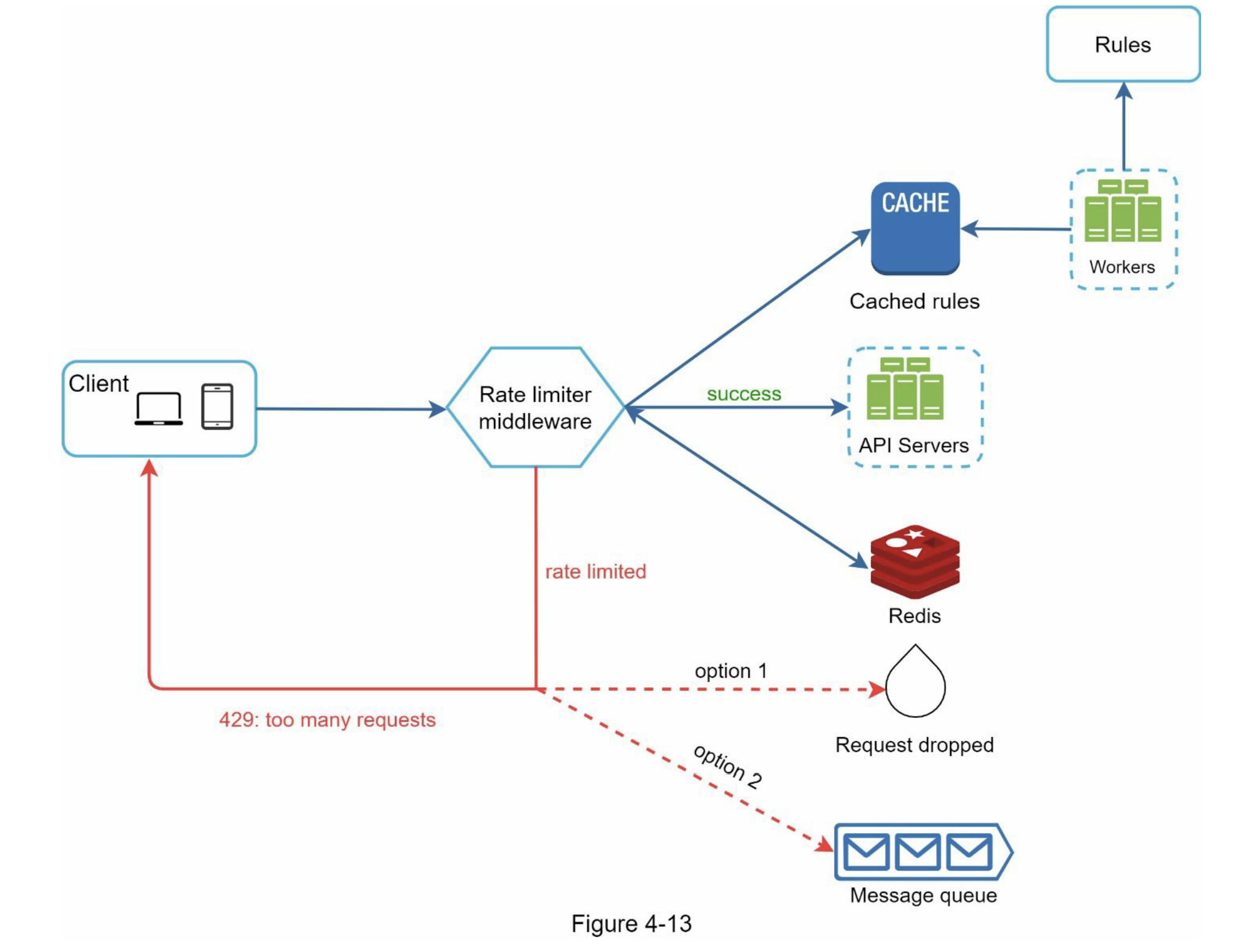
Rate limiter middleware loads rules from the cache. It fetches counters and last request timestamp from Redis.
Token bucket algorithm
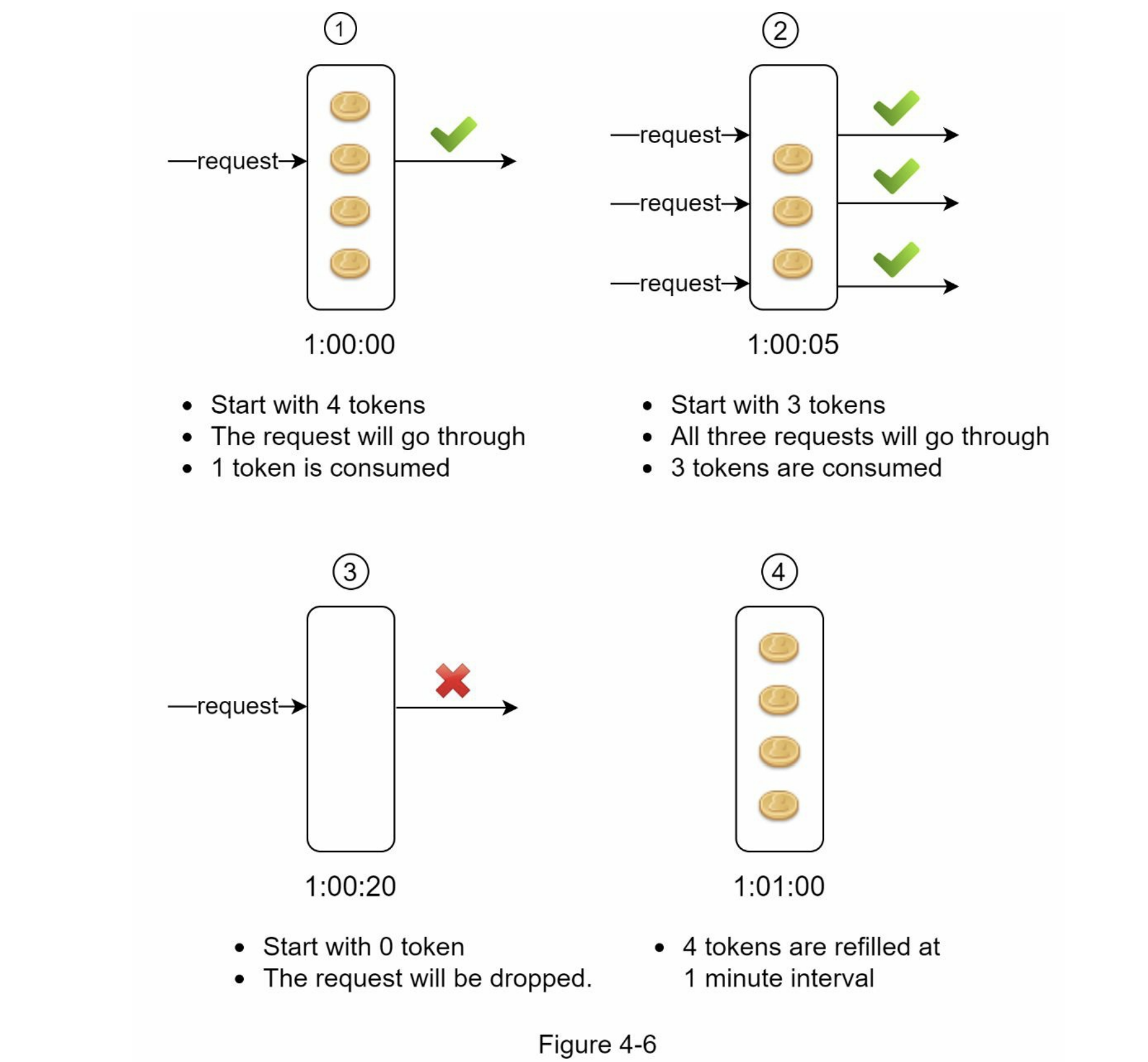
Bucket size: the max number of tokens; Refill rate: number of tokens put into.
- Pros: memory efficient; allow a burst in short periods;
- Cons: hard to tune the two parameters.
Leaking bucket algorithm
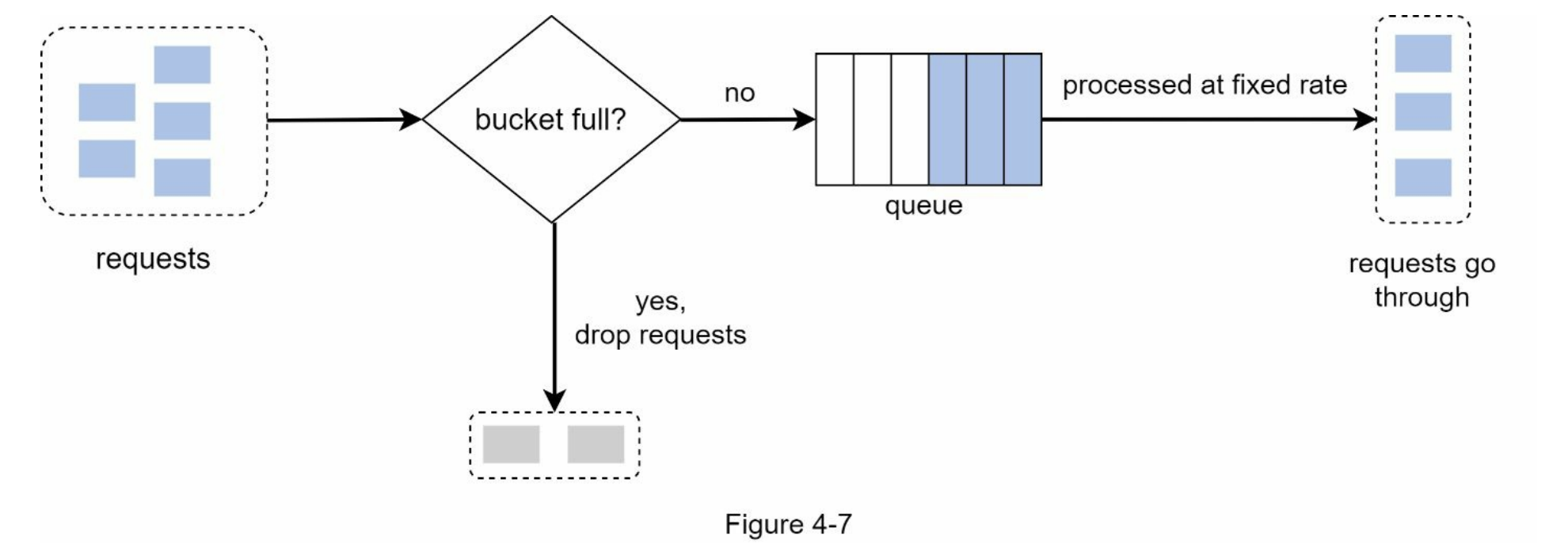
Bucket size: equal to the queue size; Outflow rate: processing speed.
- Pros: memory efficient (limited queue size); process at a fixed rate.
- Cons: a burst of traffic will fill up the queue and limit the recent requests; hard to tune the 2 parameters.
Sliding window log algorithm
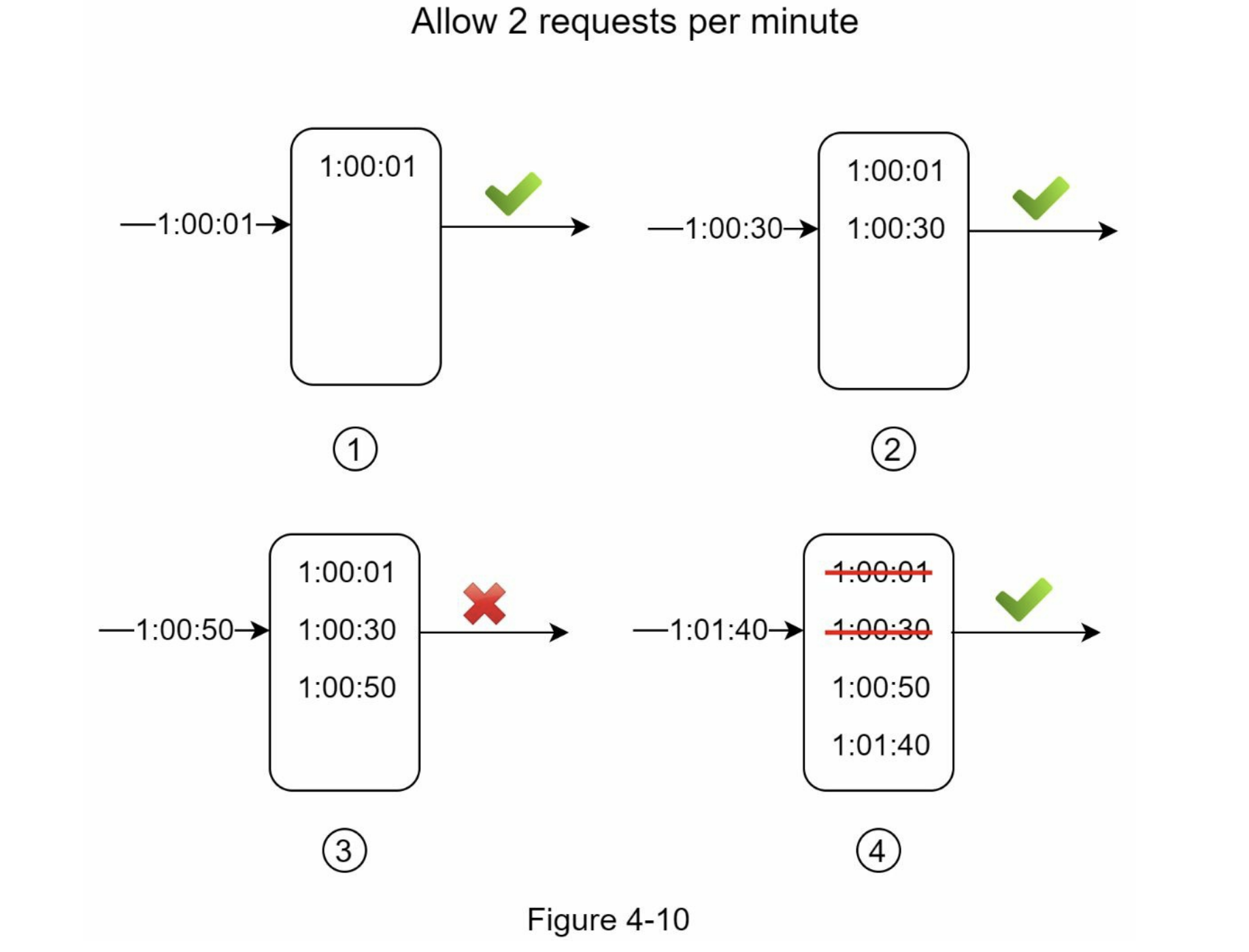
Keep track of request timestamps using Redis; Remove outdated timestamps when new requests come; limit according to the log size.
- Pros: accurate, not exceeding the limit.
- Cons: consume lots of memory; need to store timestamp even if a request is rejected.
Sliding window counter algorithm
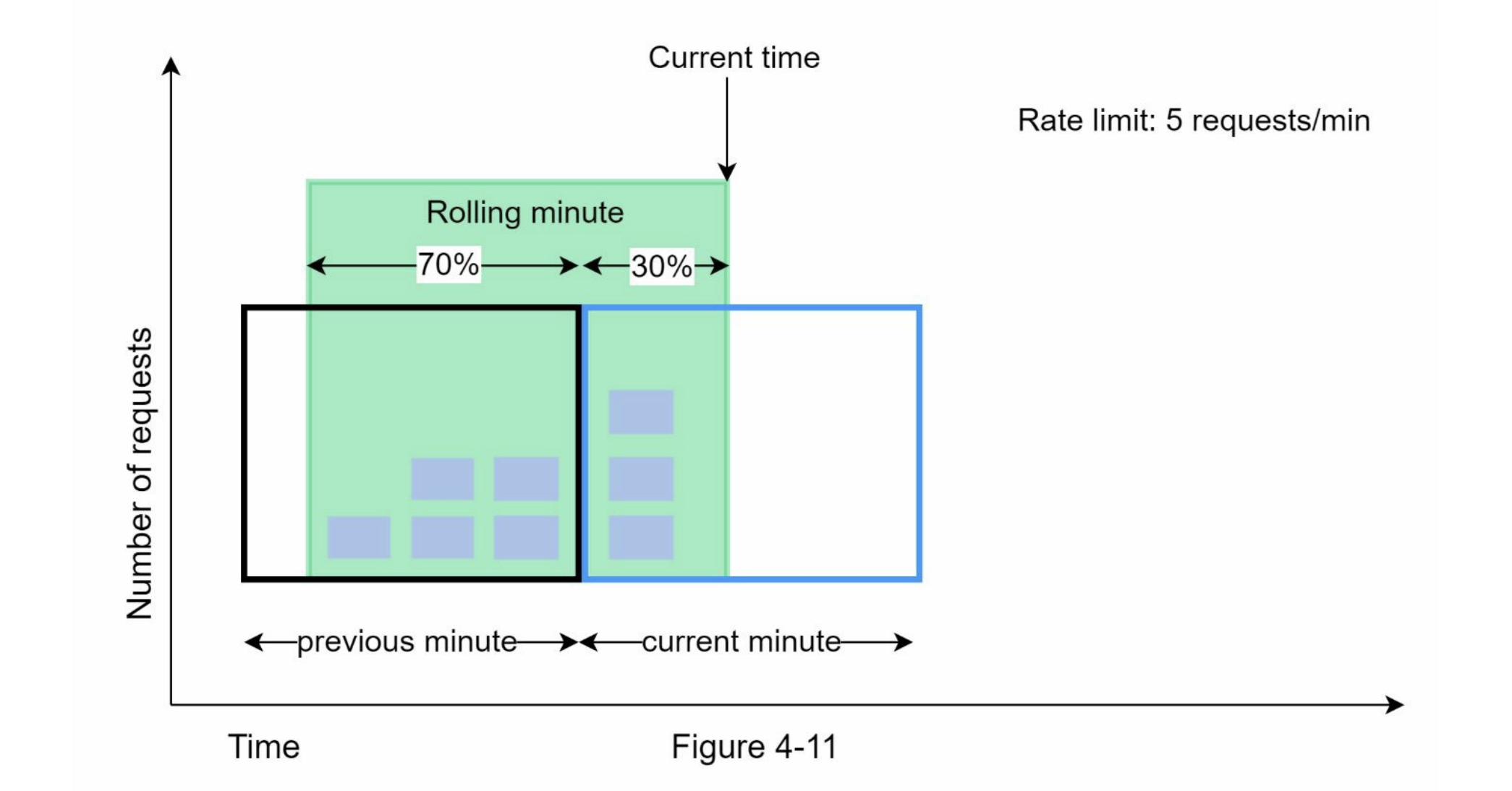
requests in the rolling window = Requests in current window + requests in the previous window * overlap percentage of the rolling window and previous window.
- Pros: smooth out spikes through avg; memory efficient.
- Cons: assume the previous window are evenly distributed.